


<p><strong>Heritage</strong></p>
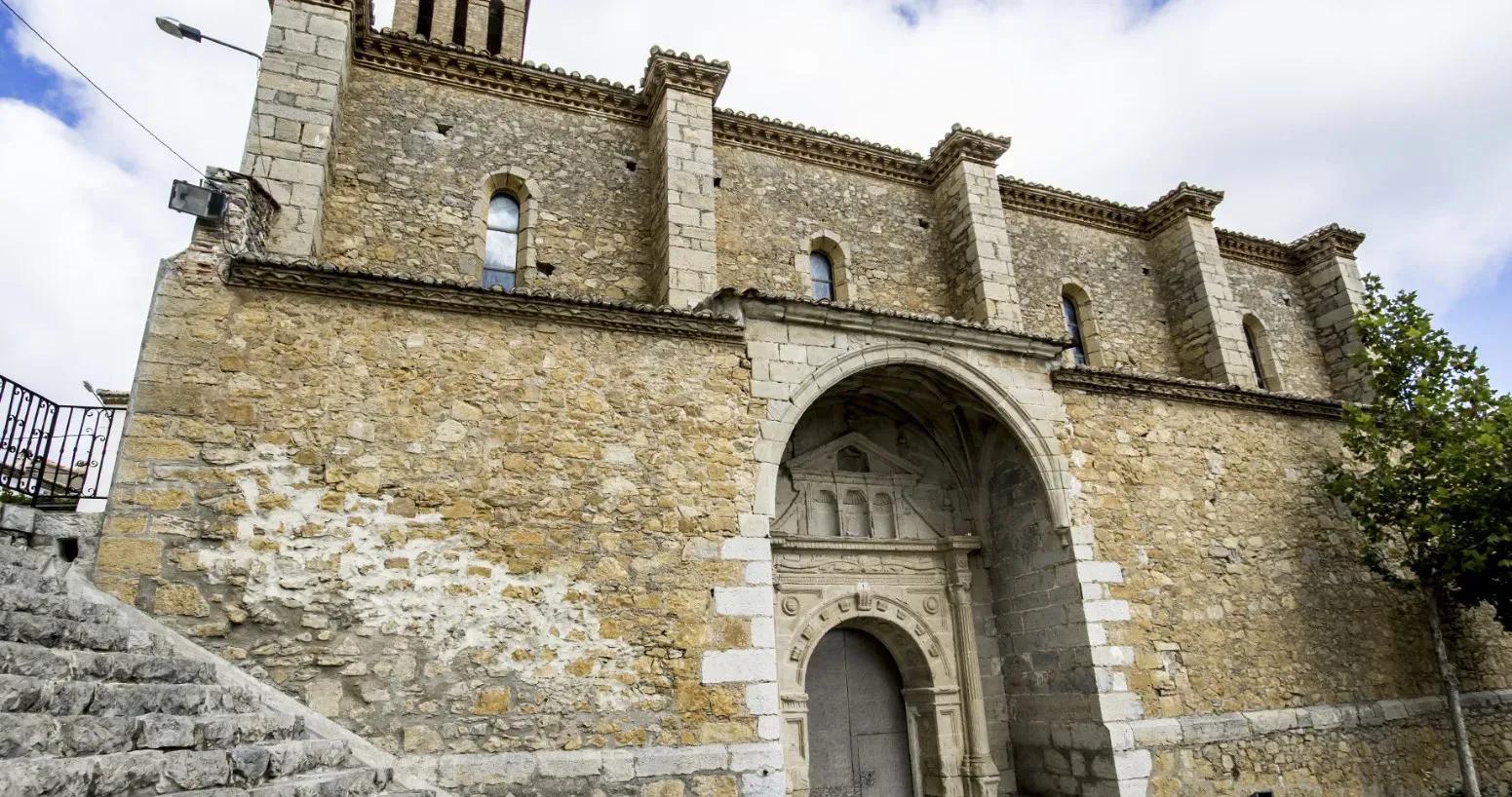
PARISH CHURCH OF OUR LADY OF THE ANGELS
During the Reconquest, Alfonso II granted the church at the Albentosa fort to the Order of the Temple (1182–87).
The church served as the usual meeting place for the General Council of Albentosa, the local governing body. The current temple, built of masonry and ashlar, replaced an earlier “Old Church,” whose timbers, tiles, and other materials were sold in 1721 to benefit the parish.
It is a Gothic-Renaissance building with a single nave, polygonal apse, side chapels, and a high choir at the foot, all covered with ribbed vaults. Its Renaissance portal stands out from the more common Baroque examples in the region.
A Gothic altarpiece of the Virgin of the Angels, a fine work attributed to Pere Nicolau (15th c.), was dismantled in 1936 and disappeared. Modern statues now replace the lost originals.
TOWN HALL
This is a corner building with a rectangular plan made of whitewashed masonry. The main façade features a symmetrical composition with a slightly pointed central ashlar arch flanked by two windows on the ground floor, while the upper floor shows two arched balconies. The structure is topped with a clock between Tuscan-style columns and an arch bearing an inscription, along with a bell and a weather vane. The cornice is irregular, with moldings and a double-tile brick eave.
CASTLE
Albentosa Castle sits atop a hill between the Albentosa River and the town center. Visible today are the remains of a square-plan fortress with round corner towers and deteriorated masonry walls. The original castle, apparently from the 12th century, held a strategic position controlling the road between Teruel and Valencia. Earlier settlements are documented on the site, with Iberian materials leading to its designation as an archaeological site. It is currently used as a cemetery, with access via a modern Via Crucis marked by religious peironas. Excellent panoramic views over Albentosa, the viaducts, and farmland can be enjoyed from viewpoints around and within the castle.
HERMITAGE OF FUEN DEL CEPO
A simple rectangular single-nave structure of small size with four sections. It features a barrel vault with lunettes and arch segments supported by pilasters. Built of whitewashed masonry with a semicircular arched doorway, small central window, and single-bell brick belfry. The roof is gabled with a triple tile cornice.
HERMITAGE OF THE HOLY CAVE IN THE MASES OF ALBENTOSA
A very simple rectangular single-nave building divided into three sections, with semicircular arch segments and a classic molding impost. It has a barrel vault with lunettes and a double-pitched roof with alternating brick cornices. Made of rough masonry with ashlar corners. The façade features a brick lintelled door, a rectangular window above it, and a one-eyed brick belfry.