Turicleta
Route the return to the land of Saint Peter - Highlands of Soria
Moderate

Route the return to the land of Saint Peter - Highlands of Soria

San Pedro Manrique, Castilla y León
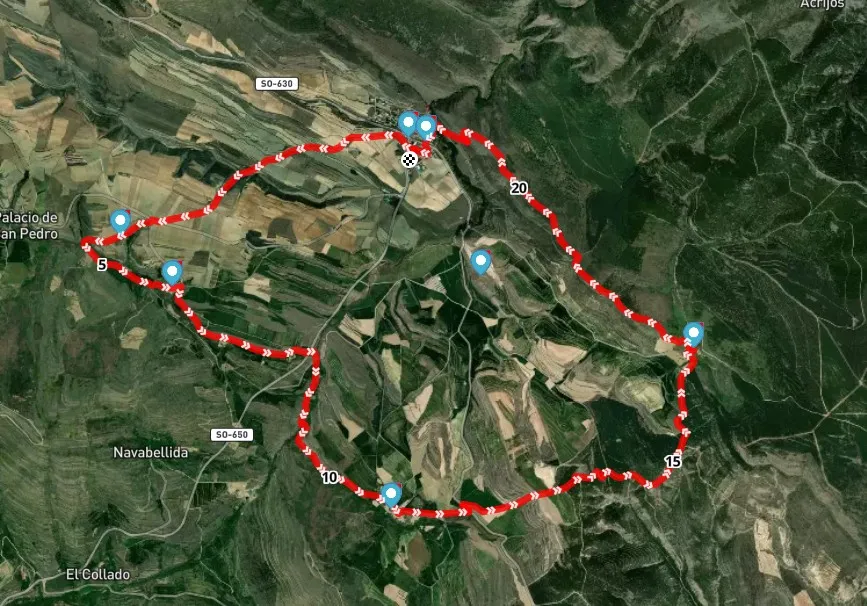
22.4km Distance
2h Duration
1284m Max altitude
e-Bike Type

About this route

This route is a deep immersion into the soul of the Highlands of Soria, a rugged and authentic territory where time moves slowly and the landscape retains an untouched beauty. Starting from San Pedro Manrique, the route outlines a wide circular path that allows understanding the rural, historical, and natural dimension of this border region between Castilla and La Rioja.

The pedaling takes place among open fields, gentle hills, agricultural paths, and solitary tracks, surrounded by an almost absolute silence, only interrupted by the wind and the song of the birds. Throughout the route, the cyclist is enveloped by a mosaic of grasslands, areas of low mountain, and wide horizons, so characteristic of the Highlands of Soria.

The route offers continuous changes of perspective: comfortable sections that invite you to let yourself go, alternated with gentle climbs that allow you to gain height and enjoy open views over the territory. It is not a technical route, but an experience of connection with the environment, ideal for those looking to pedal without hurry and feel the landscape.

San Pedro Manrique, known for its ancestral Pass of Fire, adds a strong symbolic and cultural component to the route. Cycling around it is to traverse a territory rich in tradition, where the bond between humans and the land remains very present.

Overall, this loop is a serene, wide, and profoundly rural route, perfect for enjoying on an electric bike or gravel bike, stopping to observe, breathing deeply, and letting the landscape do the rest.

Types of paths:

  1. Path: 12.1 km
  2. Other routes: 4.42 km
  3. Narrow path: 2.67 km
  4. Road: 2.13 km
  5. Street: 1.00 km
touch_app
Toca para interactuar Usa dos dedos para hacer scroll

Mapa interactivo proporcionado por

Wikiloc open_in_new

Route gallery

Moments captured by our community.

Route the return to the land of Saint Peter - Highlands of Soria - Image 1
Featured Route the return to the land of Saint Peter - Highlands of Soria
Route the return to the land of Saint Peter - Highlands of Soria - Image 2
Route the return to the land of Saint Peter - Highlands of Soria
Route the return to the land of Saint Peter - Highlands of Soria - Image 3
Route the return to the land of Saint Peter - Highlands of Soria

Points of interest on the route

Discover unique places to stop and enjoy.

San Pedro Manrique place Otro

San Pedro Manrique

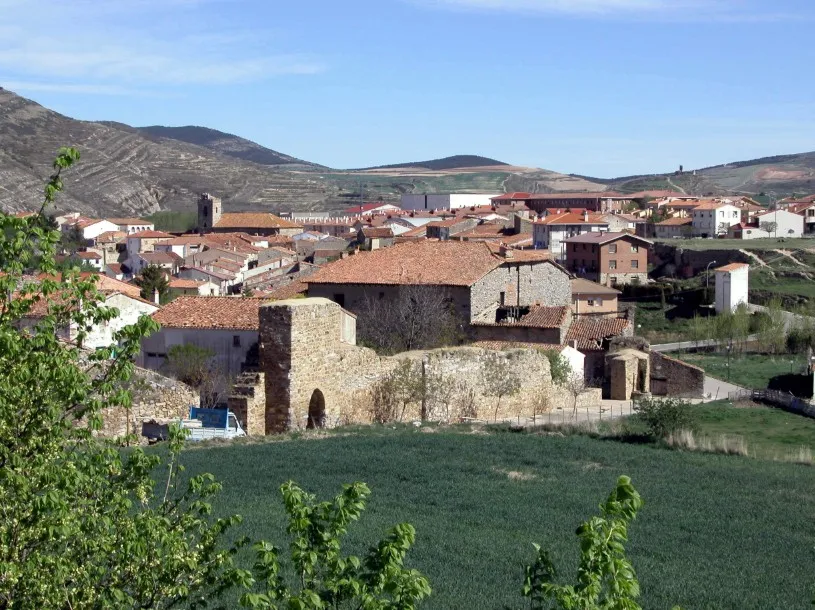
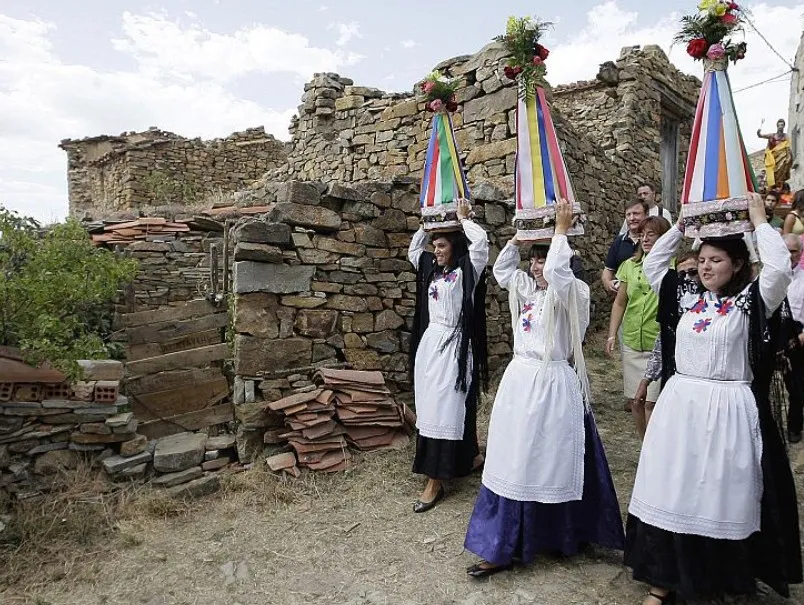
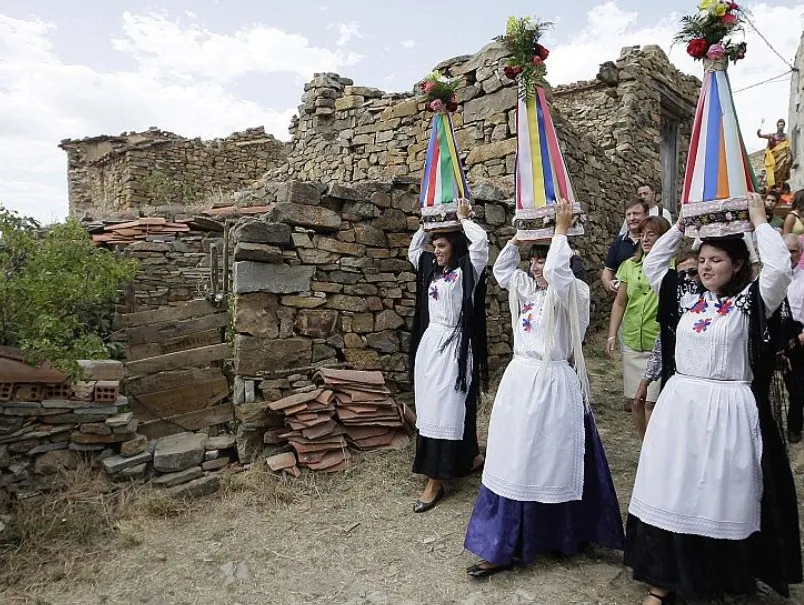
San Pedro Manrique is a set of popular mountain architecture. It was conquered and repopulated by Navarrese in the 11th century. It was the head of its community of villa and land. In 1464 it changed its old name of San Pedro de Yanguas to the current one by adding the surname of its family, Manrique, by the Duke of Nájera. The most prosperous period was during the peak of the Mesta, when it had four parishes, reached a population of over 4,000 people, and was linked to international wool trade, especially through the Atlantic port of La Rochelle. Its Fiestas del Paso del Fuego, declared of National Tourist Interest, stand out, during which locals walk barefoot over a carpet of embers and in which three girls dressed in colorful costumes and hats made from baskets, the Móndidas, are the protagonists. Regarding its heritage, the church of San Martín de Tours, the nearby Romanesque ruins of San Pedro el Viejo, the hermitage of the Virgen de la Peña, and the Museum of the Paso del Fuego.

Rabanera Hermitage (Our Lady of the White) castle Edificio

Rabanera Hermitage (Our Lady of the White)

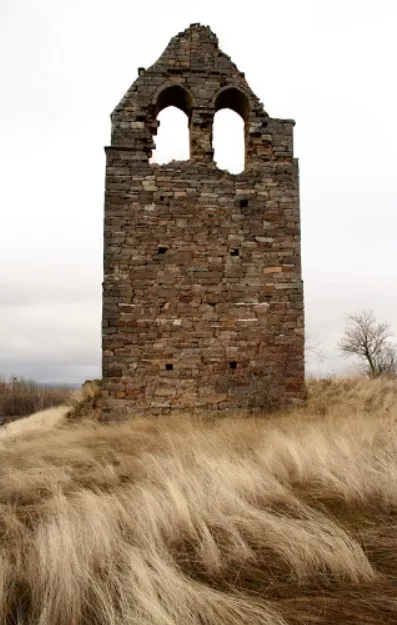
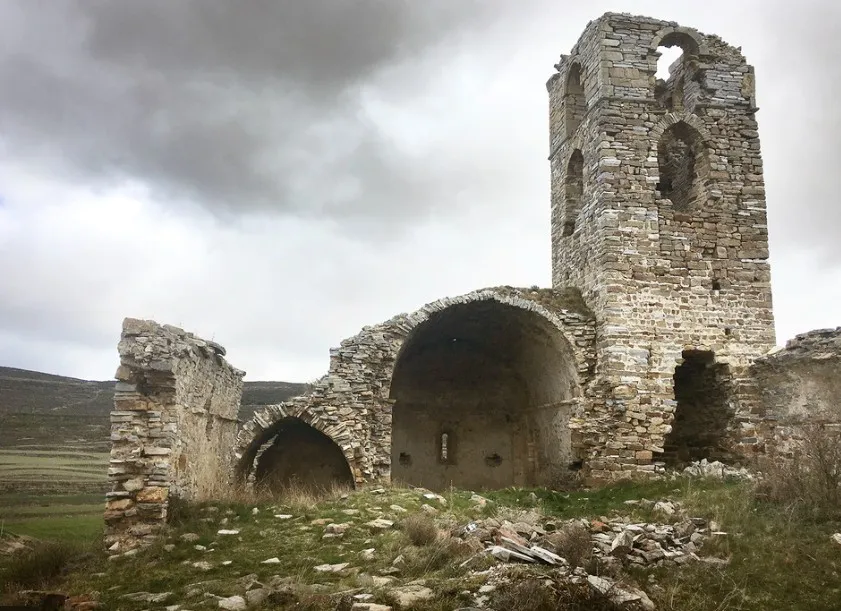
Near the village of Ventosa de San Pedro was Rabanera, a small hamlet with very ancient origins, as there are remains of a hillfort from the Early Iron Age and of what was the church of this population, built in the medieval style. It is believed that it was definitively abandoned in the mid-18th century. The remains of the church dedicated to Our Lady of the White (which currently functions as the hermitage of Ventosa) point to a Romanesque construction, with a single nave and a semicircular apse at the head. A bell tower with a triangular top was later added at the feet. Possibly the altarpieces and Romanesque baptismal font are relocated in the churches of Palacios and Ventosa de San Pedro. A place linked to events of 1936 during the Civil War.

Ventosa de San Pedro place Otro

Ventosa de San Pedro

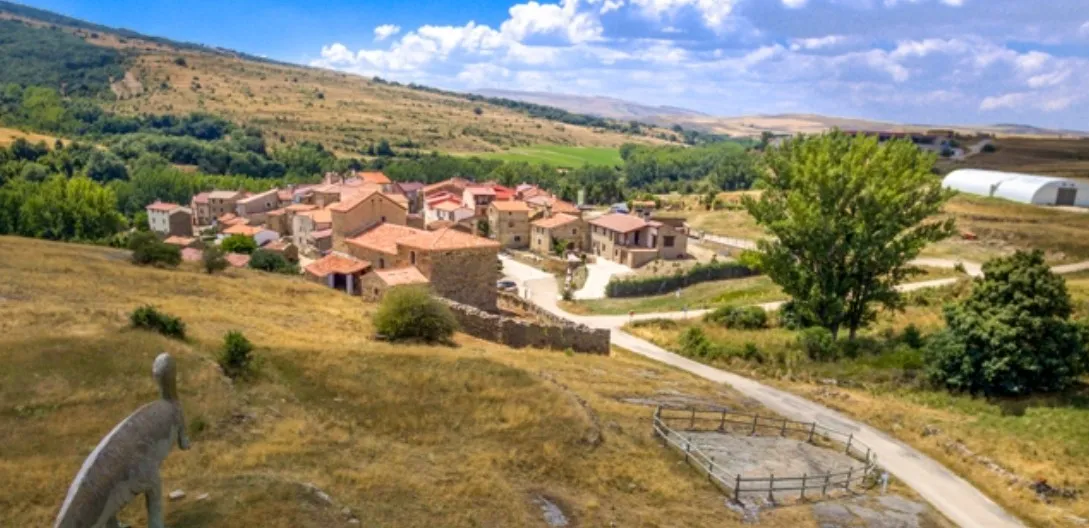
Small locality by the Ventosa River and in its surroundings is located the site of footprints of San Roque. In addition to the replica of iguanodon, this place offers us traces of various ornithopod dinosaurs and birds from the Lower Cretaceous. It has also maintained its traditional móndidas.

Matasejún place Otro

Matasejún

This locality is located at the foot of La Muela. The church of Santo Domingo de Silos and the site of the footprints of Las Adoberas stand out, with wave marks and well-preserved traces of theropods. It preserves the tradition of the Móndidas, as in San Pedro Manrique.

Sarnago place Otro

Sarnago

We cannot include this locality in the group of depopulated areas because, although it has brushed against this situation, the intense activity of its former and new inhabitants has managed to revitalize this village. In addition to fixing its streets and several private buildings, they have created an ethnographic museum, a library in the old laundry, a co-working space, as well as recovering its traditional festivals of the Móndidas and carrying out numerous activities. This population reached 186 neighbors at the beginning of the 20th century. Nearby is located the hillfort of El Castillo from the Iron Age.

Saint Peter the Old (Romanesque ruins) castle Edificio

Saint Peter the Old (Romanesque ruins)

Remains of an ancient monastery that some authors, without documentary evidence, attribute to the Order of the Temple. There are ruins of the church, in Romanesque style, and some dependencies. But what is surprising is its privileged location, on a steep hill.