



Heritage
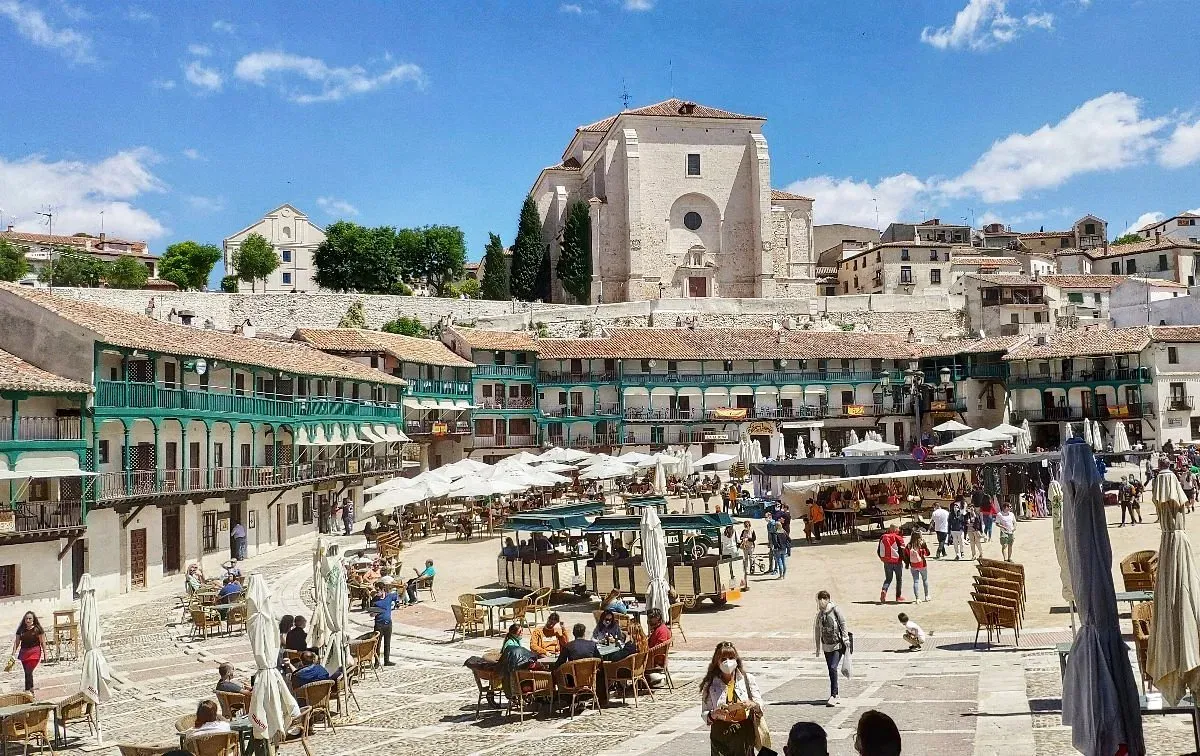
Chinchón boasts a valuable civil and cultural heritage that encapsulates centuries of history. The Plaza Mayor, one of the most beautiful squares in the world, of medieval origin and enclosed by wooden balconies, has been the setting for markets, bullfighting festivities and theatrical performances. The Monastery of the Augustinians, now a Parador de Turismo, was founded in the 17th century by the Counts of Chinchón and is one of the most outstanding monumental complexes in the town. The Clock Tower, the only remaining vestige of the former Church of Our Lady of Grace, is one of the municipality’s most recognizable symbols. The Lope de Vega Theatre, built in the 19th century on the site of the former count’s palace, recalls the writer’s connection with Chinchón. Completing this tour are the Castle of the Counts, a medieval fortress closely linked to the town’s historical conflicts, the House of the Chain, where King Philip V once stayed, the Castle of Casasola, a privately owned Gothic-style fortress, and the Interpretation Centre, which offers a comprehensive overview of the history, culture and tourist resources of Chinchón.
Chinchón preserves a remarkable ensemble of churches and hermitages that reflect the town’s historical and artistic evolution. The Church of Our Lady of the Assumption, built between the 16th and 17th centuries, combines Gothic, Renaissance and Baroque styles and houses on its main altar the painting The Assumption of the Virgin by Francisco de Goya. Nearby, the Convent of the Poor Clare Nuns, founded in 1653, stands out for its Baroque austerity, the pantheon of the Counts of Chinchón and the nuns’ traditional confectionery. Among the hermitages, the Hermitage of San Antón, the oldest religious building in the historic centre, with Romanesque remains and Gothic paintings, and the Hermitage of San Roque, dedicated to the town’s patron saint, are particularly noteworthy. Completing the ensemble are the Hermitage of Our Lady of the Rosary, annexed to the Parador and known for its Baroque frescoes, and the Hermitage of Mercy, the former hospital church, which houses a valuable altarpiece and a painting of Saint Lucy.