
<p><strong>Heritage</strong></p>
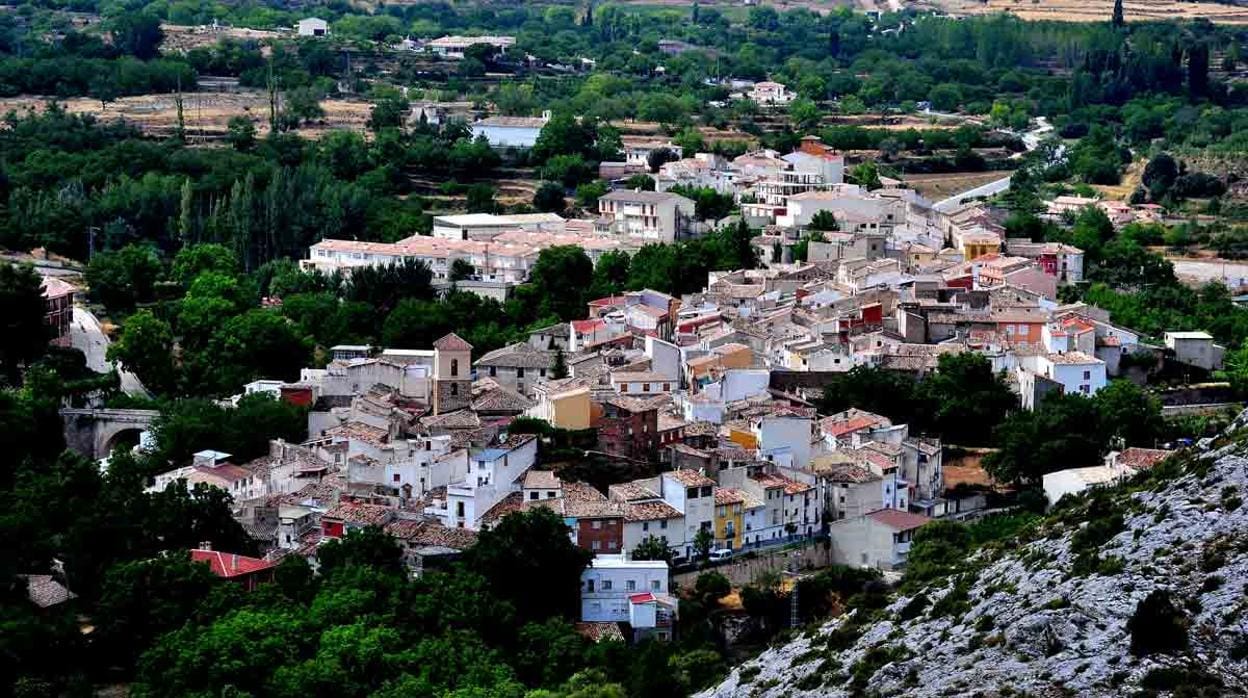
Nerpio is immersed in the narrow and twisting Taibilla valley and its urban center is located on the slopes of the Hill, commonly called Cerro de las Antenas – as it was there where the first television antennas were installed – majestic rocky masses that are born on the banks of the Taibilla crossing, which runs parallel to the population. Along the other side runs the Acedas, which joins the Taibilla in the Angosto, which gives the waters an exceptional role in the town.
The urban center is located between these two rivers, but currently other population centers have been forming within the same urban perimeter: the stone bridge joins the town with the leisure areas (pubs and clubs) where new houses are also being built, as well as in the part that runs between the forest houses and the gas station (El Colla). Eleven villages and about a hundred farmhouses and population centers depend on Nerpio, these are:
- La Dehesa, where its farmhouses stand out.
- Yetas, with its carefully maintained terraces of Arabic tradition.
- Jutia, its pine forests and its valley.
- Las Cañadas, at the foot of the Pico de las Cabras among holm oaks.
- Los Chorretites, with its junipers.
- Pedro Andrés, with its incipient industry.
- Vizcable, and its beautiful valley.
- Turrilla, with its orchard.
- Bojadillas, between large rock formations.
- Huebras and Beg.
We also highlight the importance of farmhouses and villages such as Casa de la Cabeza, Cortijo de Isidoro, Cortijo Nuevo, Prado de las Yeguas, Los Sacristanes and Las Quebradas.
The urban complex maintains a certain medieval air with narrow and peaceful streets where the presence of automobiles seems to be forbidden, which can only circulate with limited freedom in the area of the Carretera, the Terrera or the Plaza. Nerpio is a conglomerate of alleys, slopes, stone steps, small squares and thousands of dream corners where you can stumble upon its elderly inhabitants, children leaving school or even some animal. The town integrates harmoniously with nature; its streets often lead to orchards, forests or the riverbank. We can lose ourselves in a street walk and observe the curious names of some streets:
- La de los Coches
- Callejón de las Calaveras
- Calle Corralico
- Go down to the river houses
- Go up to the slope of the Hermitage through Casas Nuevas
- Ascend to the castle viewpoint
- The route of the bull run from the fountain of the Capra Hispánica passing through El Partidor, Calle Ancha and ending at the Plaza Mayor
- Go up the alley of the Urdidora ending at Calle Alta
- Observe the nearby Hill of the Antennas and the forest that covers the Taibilla from Calle de la Cruz
- Park the car in the Terrera and see the passage of the Acedas
- Go down from the square passing under the Church Arch through Calle de los Huertos to the Angosto
All of this is dotted with several fountains and spouts to quench thirst and cool off in this labyrinth of narrow streets. Wherever you go, during the day or with the lights of the night, Nerpio is a compendium of rural architecture that, with exceptions, maintains its ancient flavor and a respect for the past through these old constructions. But Nerpio does not remain impassive to the passing of time and modernity also reaches its streets, it is worth noting:
- The modern and functional building of the House of Culture of recent construction.
- The rehabilitation of the mill that supplied old light to the town, La Fabrica de la Luz, where a tourism center is being built, immersed in a beautiful recreational area surrounded by walnut trees and where the water runs fresh.
The evidence that history has left its mark on Nerpio is varied, both in the town itself and in the villages, which unfortunately have not been free from the plundering and looting of ignorant people who have destroyed part of our heritage. We repeat that one of the main attractions of Nerpio is its history, for, as a slogan that tried to promote tourism said: "The municipal term of Nerpio combines history, tradition, present and future".