



<p><strong>Heritage</strong></p>
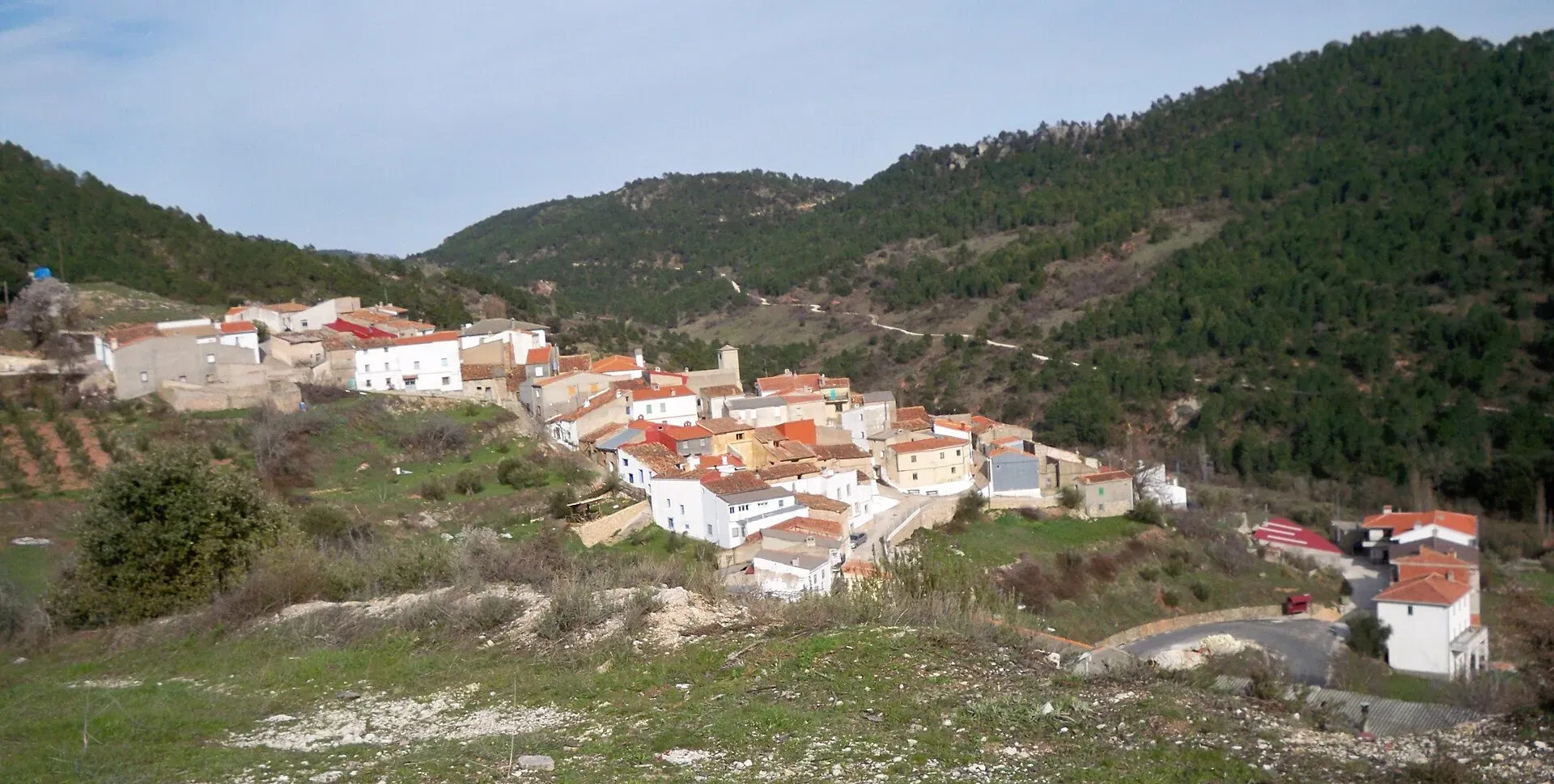
Molinicos is located in the flow and confluence of the valley formed by 2 streams, the arroyo del Pardal and the arroyo de Fuente-Higuera.
This makes its urban center a framework of steep and narrow streets that seem not to want to detach themselves from that pleasant and peaceful mountain atmosphere.
Crowned on its southeast slope by the peña Perico, an emblematic rock for the inhabitants of the town, the old town of Molinicos develops at the confluence of the two streams in two main areas: one high and the other low, separated by a spectacular ravine.
In both areas, several molinos (mills) were built that took advantage of the flow of the streams to work.
The municipal term is composed of, in addition to Molinicos itself, its villages, some already uninhabited, and also groups of farmhouses and scattered hamlets: Los Alejos, Alfera, Las Ánimas, Cañada Morote, Cañada Provencio, Los Collados, Fuente-Higuera, Las Hoyas, Mesones, El Pardal, Pinilla, Torre-Pedro, Vegallera, El Morcillar, Las Huertas…
Molinicos does not manifest its urban reality to the outside; it takes advantage of its unique topography to hide in a valley.
Historical events, the physical environment, and the main activities of the town conditioned the housing and the layout.
This is organized into three parallel longitudinal axes that converge with stairs or streets and give it a labyrinthine appearance.
Two types of architecture can be highlighted:
The baja (lower) part of the town, older, with constructions prior to the 60s. The facades form large whitewashed canvases, with black grilles, lintelled wooden doors with large courtyards and corrals standing out against them, which are part of the dwelling, where animals such as hens or chickens can sometimes be found, recalling the activity proper to each family.
This part of the town is located around the arroyo (stream), which justifies the presence of mills attached to the houses.
It is worth noting that this part is inhabited by the oldest population.
The alta (upper) or superior part, with a majority of young people, poses aesthetic problems.
Lime is abandoned and replaced by more modern materials, aiming for a more current urban appearance.
Nevertheless, this area possesses charms derived from its topography.
It is rare to find single-story houses, as the terrain is very broken, and vertical development is utilized.
The structure then responds to a stepped construction with the curiosity of being able to access a dwelling through two different floors, from two streets located at different heights.